
Replacing or putting up a garden fence is one of the most common outdoor projects – and one of the most common questions we get is “do I need planning permission?” For most gardens in England the answer is no, as long as you stay within a few simple limits.
The height limits
Fences, walls and gates usually fall under permitted development, which means you can build them without applying for planning permission if they are:
- No higher than 2 metres above ground level, or
- No higher than 1 metre where the fence is next to a highway used by vehicles, or the footpath of such a highway – typically a front garden facing the road.
If you want to go higher than these limits, you need to apply for planning permission. Replacing an existing fence with one of the same height is generally fine, but a replacement that is taller than the limits still needs permission.
When the normal rules do not apply
- Listed buildings – a fence within the grounds of a listed building may need planning permission and listed building consent.
- Article 4 directions – some councils remove permitted development rights in certain areas, often conservation areas.
- Planning conditions and covenants – newer estates sometimes have conditions (for example keeping front gardens open) or restrictive covenants in the title deeds.
If any of these might apply, check with your local council before you start. The government’s Planning Portal has the current guidance.
Measuring the height
Height is measured from the ground level. On sloping ground or where the levels differ on each side, measure carefully – and if in doubt, keep to a height that is clearly within the limit or ask the council.
Whose fence is it?
Before replacing a boundary fence, check who it belongs to. Your title plan from HM Land Registry may show boundary ownership, although many plans do not. Talking to your neighbour first avoids most disputes. There is no legal rule that the “good side” must face the neighbour – it is simply a common courtesy.
Choosing a fence that lasts
- Close-board fencing – vertical feather-edge boards on rails; very strong and ideal for exposed gardens.
- Panel fencing – quicker to install and easy to replace panel by panel.
- Concrete posts and gravel boards – the post never rots and the gravel board keeps the timber off the soil, which is where most fences fail first.
- Gates – hung on posts set firmly enough to stop sagging over time.
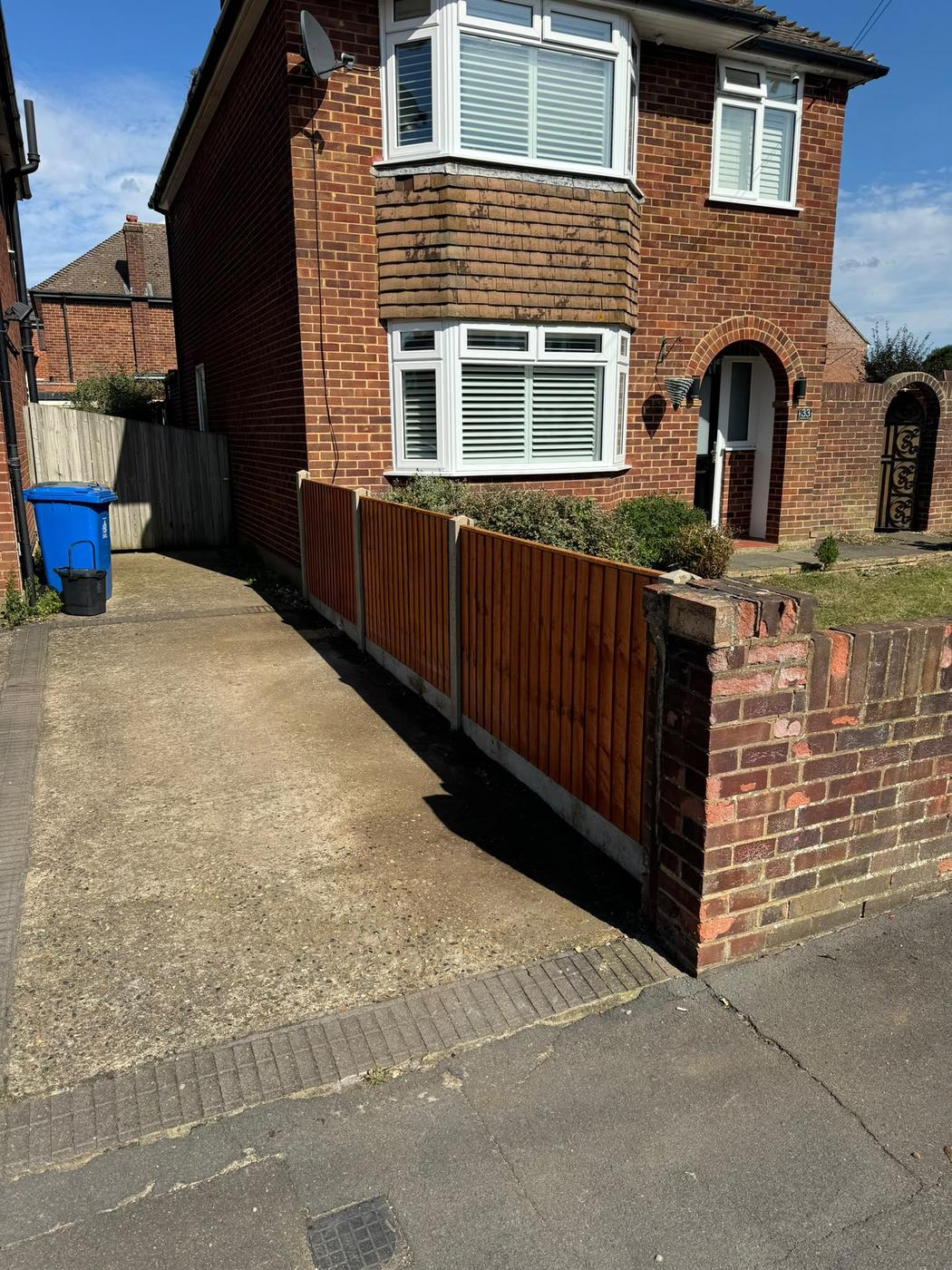
We fit fencing and look after gardens
We install close-board and panel fencing, concrete posts, gravel boards and gates, fitted straight and built to last. Our grounds team also looks after gardens year-round: clearance, lawns, hedges, beds and seasonal upkeep.